Totems
The totem projects investigate story-
telling , allegory, and balance in a variety
of materials and form. Calling upon the
language of traditional animistic
religion,s each object is researched and
chosen for its symbolic power in relation
to the other objects. Complex relation-
ships are explored. Similar to dream
analysis in the Jung tradition, the depth
of meaning rises out of a resistance to
attaching to concrete analyses. The
power of symbols exists in their ability
to point out dichotomies, existing in the
discomfort of opposites. Rocks occupy
an important place in these stories as
they continue to represent the earth in
its enormous timeline, its slow processes
of transformation, and its ambiguous
lessons for us. The materials themselves
have become part of the story as they
point more directly to human creation,
use, waste, and reuse. We are all part of
a bigger process of generation,
decomposition, and regeneration. Each
of our stories, individual and societal,
a small but essential piece in the
process of the universe.
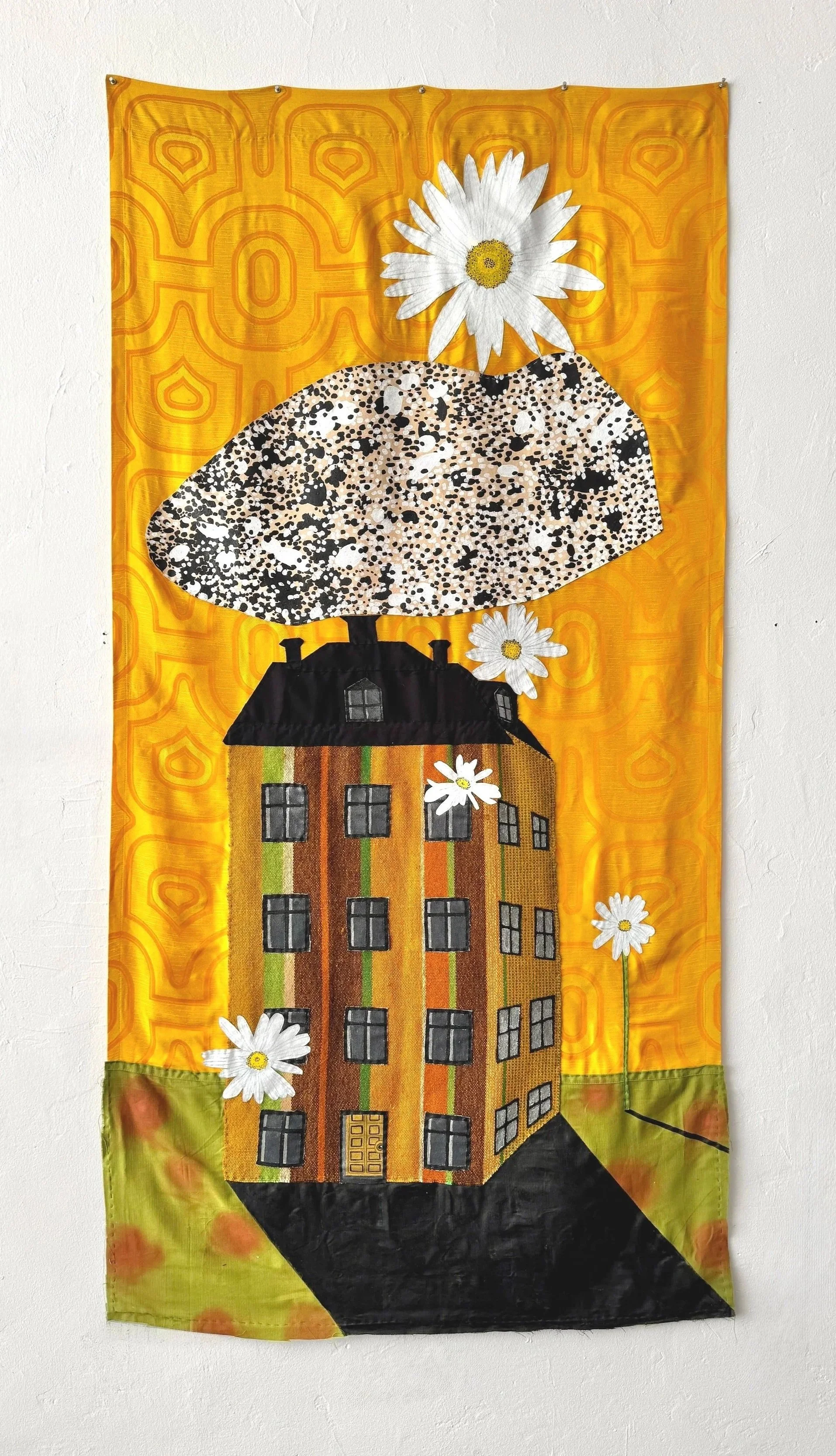
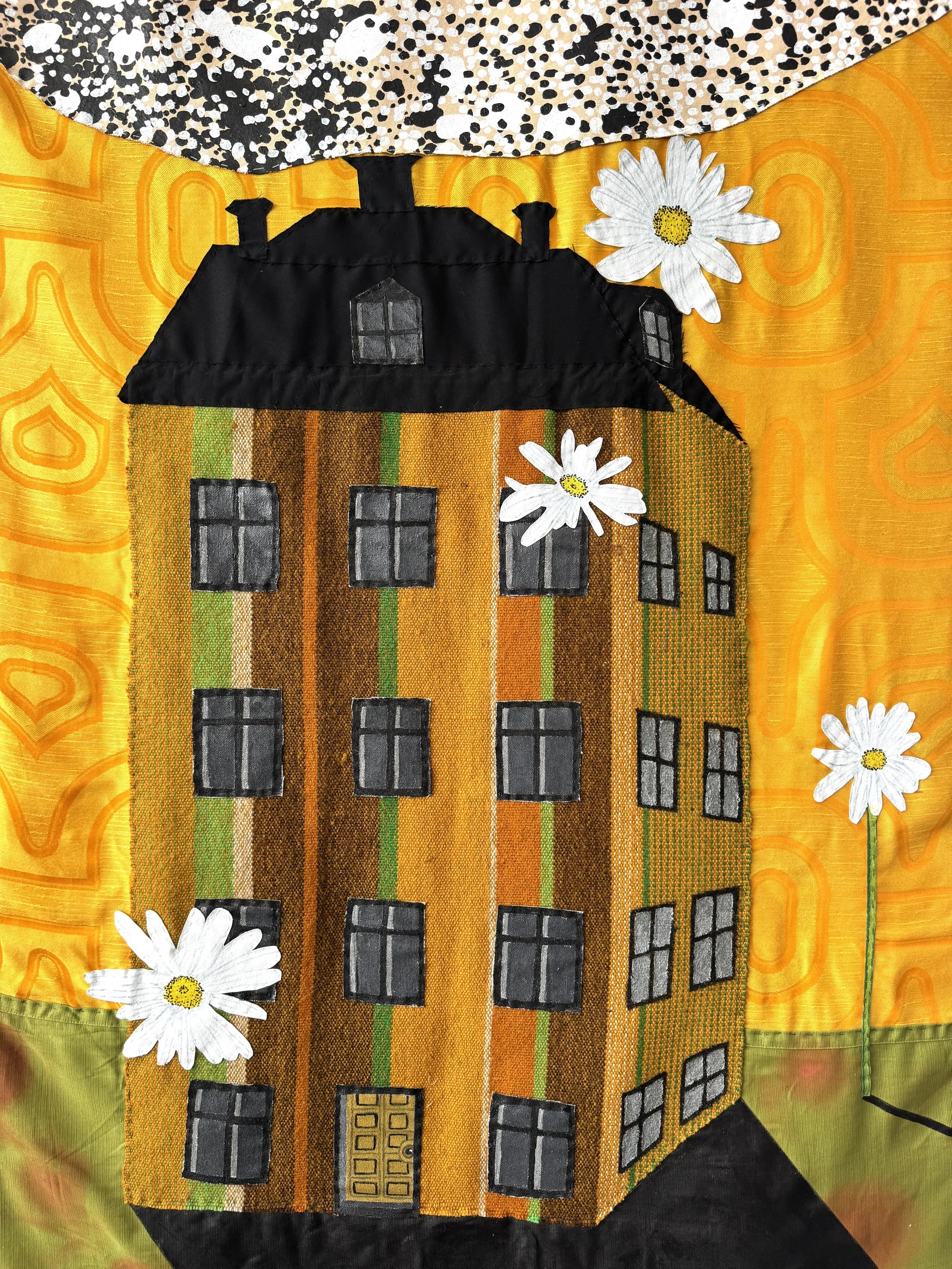
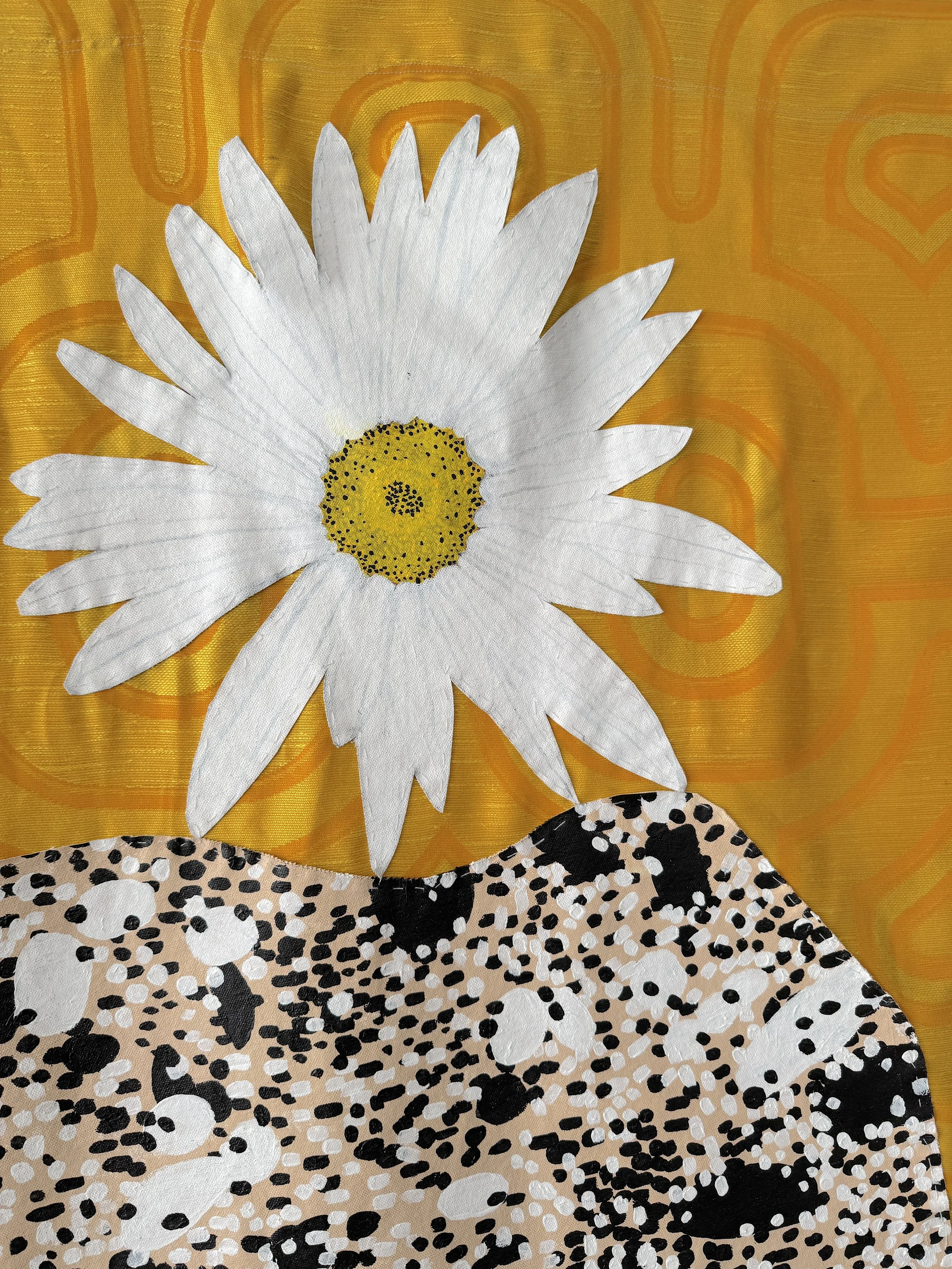
Invasion, 2025
Acrylic on handsewn home
linens and canvas
88”h x 44”w
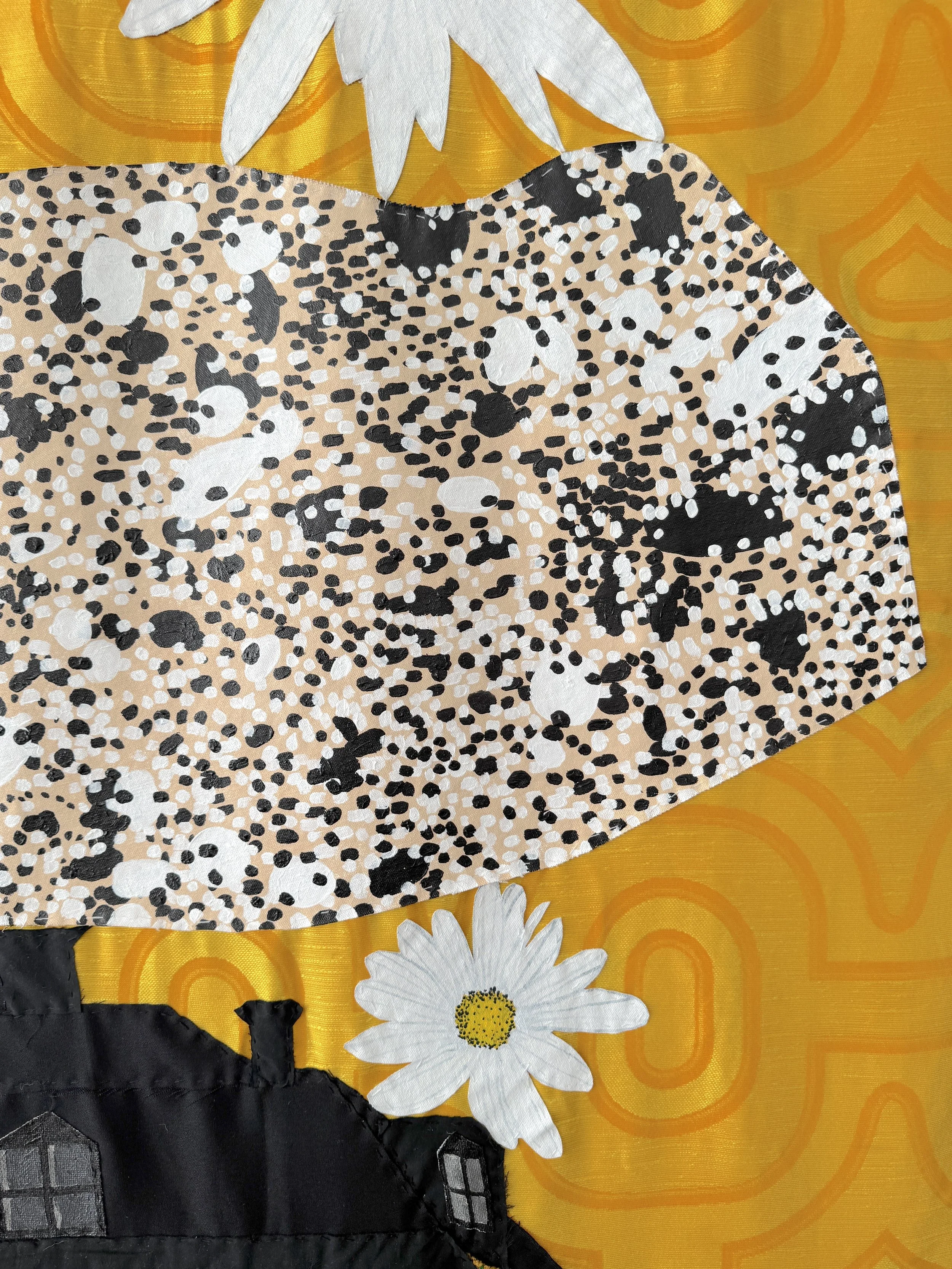
The central figure of this tower is a
precariously balanced piece of gabbro,
a metamorphic stone found in the area
of Björko, Sweden where this work was
made. Gabbro forms when lava invades
sedimentary stone in extreme
conditions like the ones that formed the
foundation of Björko. It sits atop a
building composed of elements of
buildings in Gamla Stan, the old town
island in the center of Stockholm which
is invaded by tourists daily as it is filled
with shops that sell the heritage of
Sweden to the world. Adding to the
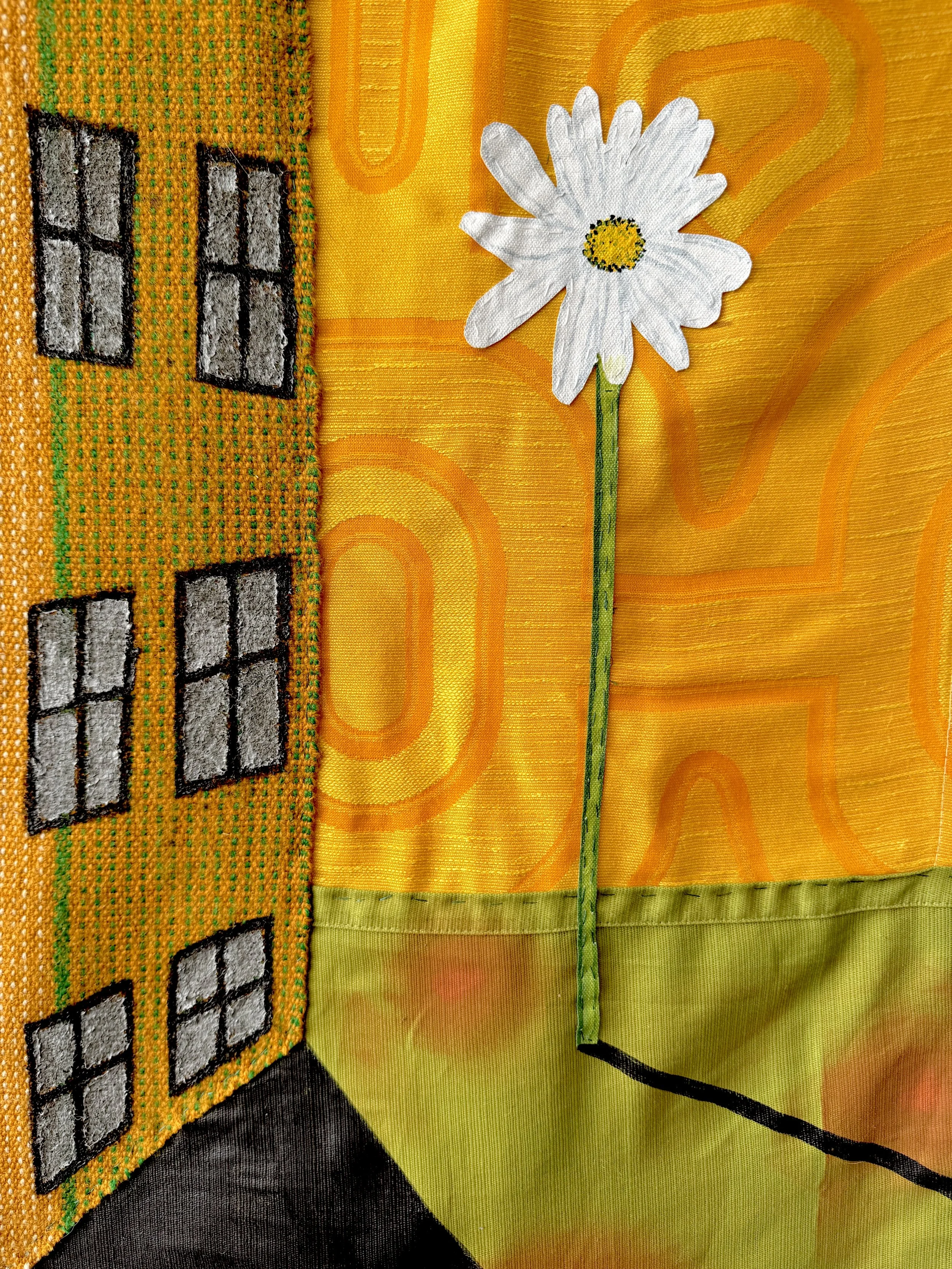
balance are oxeye daisies, one of the
main flowers of the Midsommar
celebration. Oxeyes themselves are an
invasive species, not indigenous to
Sweden, that create a grid pattern to
promulgate while forcing out native
plants. This work looks at how “invasion”,
which often takes on negative
connotations is not only a human
action, but a natural process asking
deeper questions about ownership,
nationalism, and the spaces we protect.
The use of home linens, the things we
hold dear and that build our identities
every day, further complicates our ideas
of what is “ours to protect” in an era of
increasing separatism.
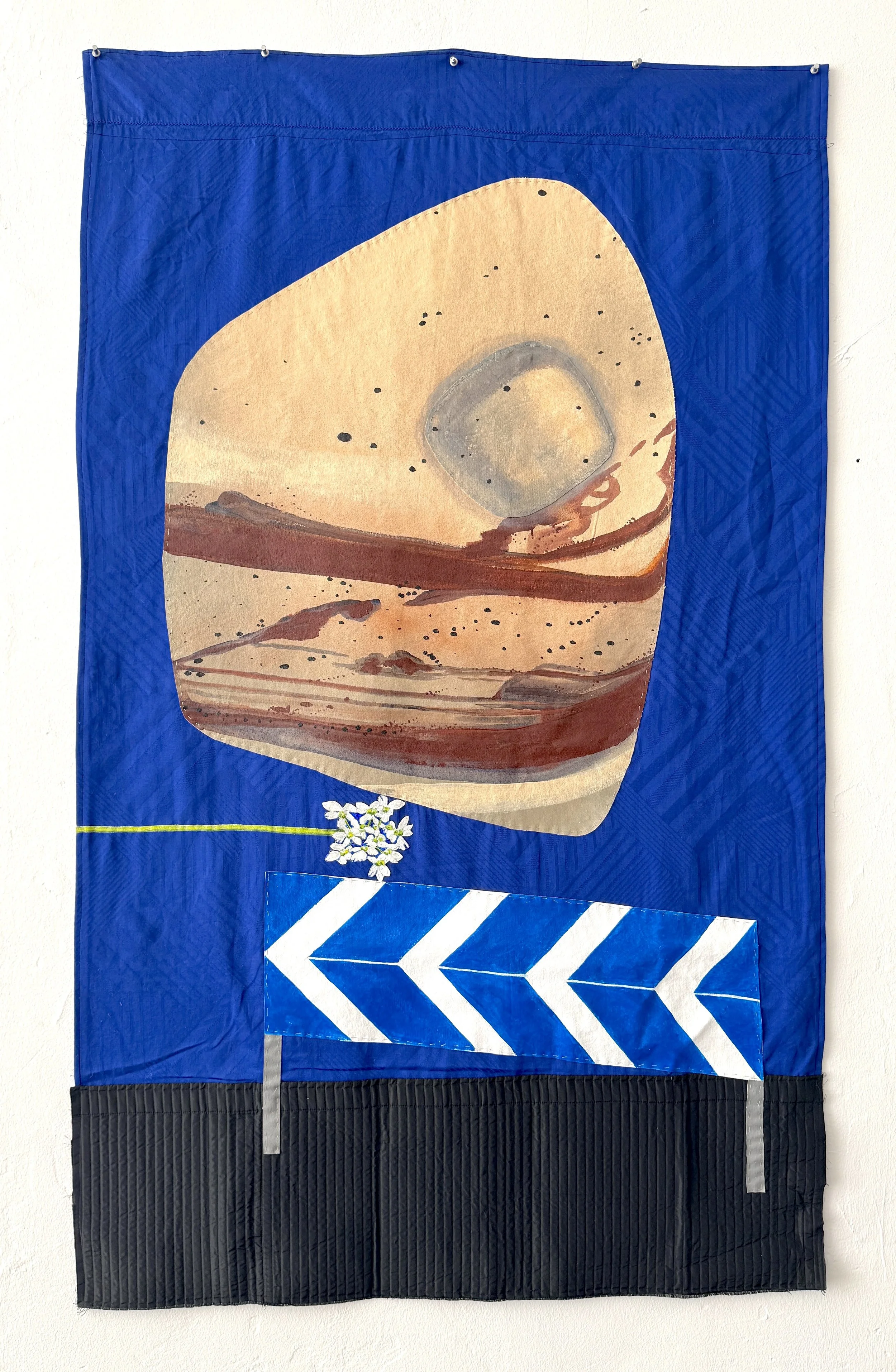
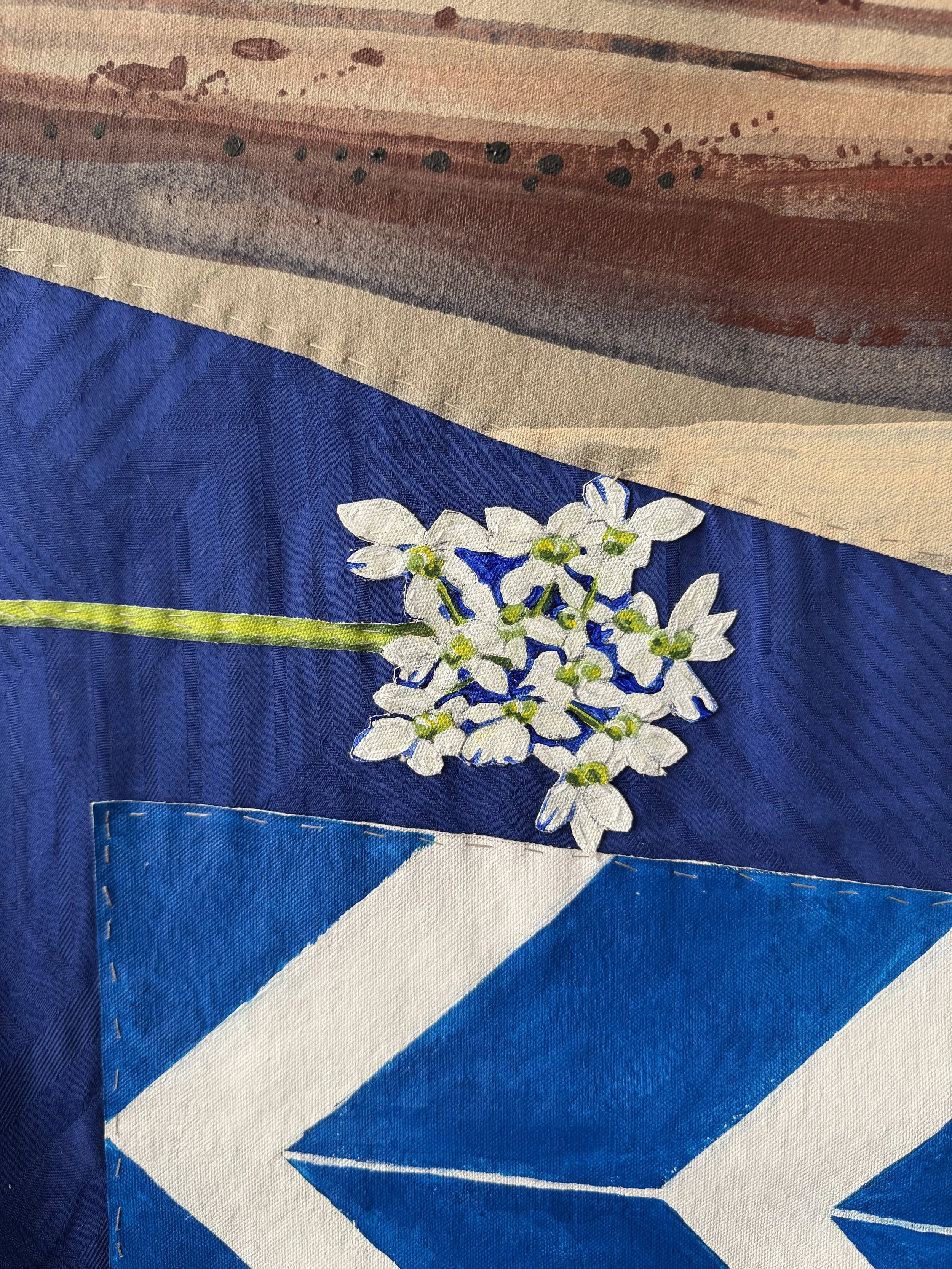
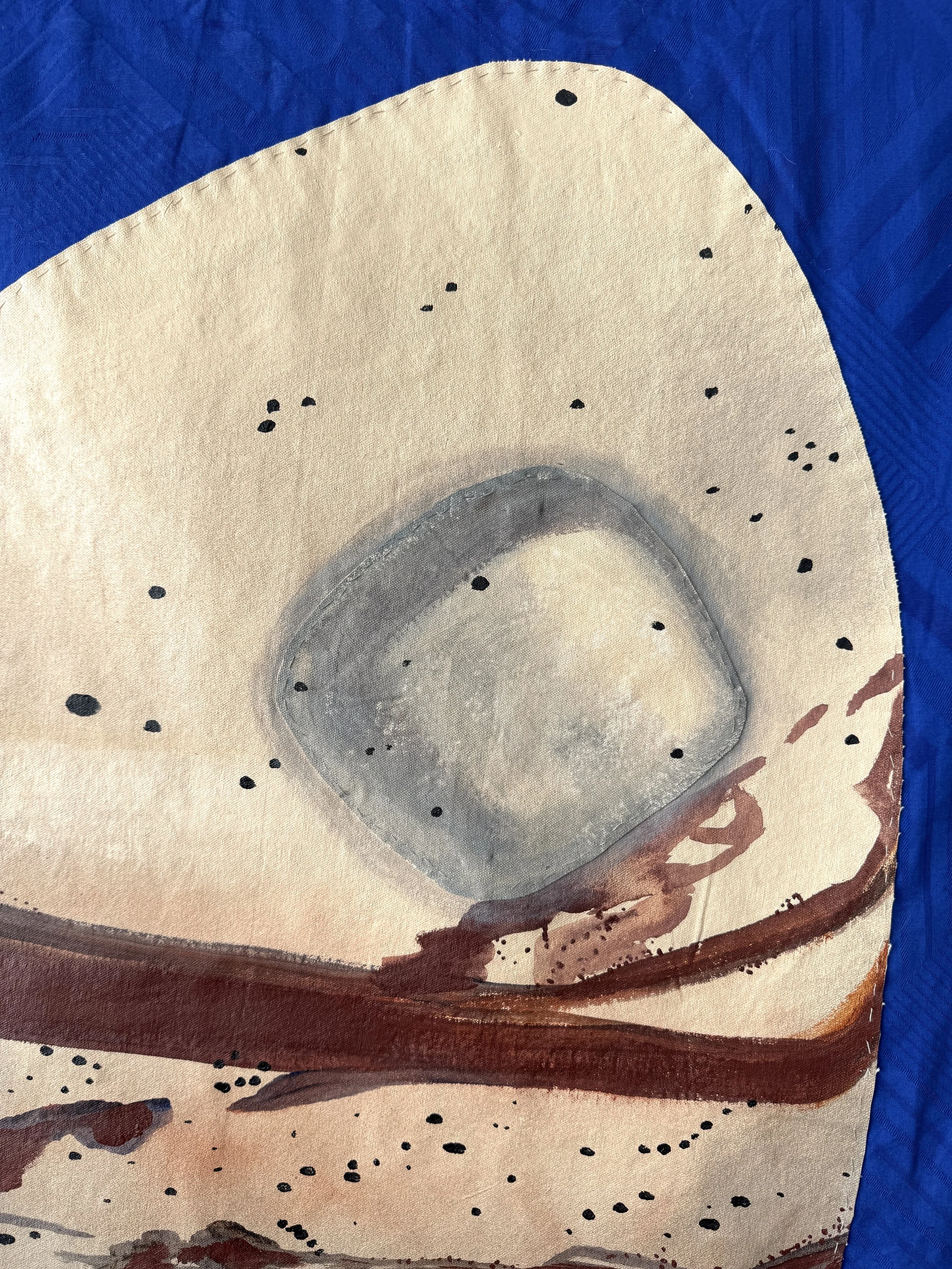
Warning Sign (Cow Parsley/
Hemlock), 2025
Acrylic on handsewn home
linens and canvas
61 1/2”h x 37 1/2”w
One of the traditional flowers of
Midsommar crowns, cow parsley is a
wildflower that signals the rebirth and
hope of spring. One of the dangers in
choosing it is its almost identical
appearance to hemlock which is
poisonous to the touch and can be fatal
if ingested. This flower holds a
precarious balance in this work
suspending a rock found in Björko,
Sweden above a traditional road sign
that warns of turns on the road in the
countryside. The rock itself has deep red
striations, an indication of iron deposits
that appear like blood across its bottom
half. I was fascinated by the elegant
design of the signs in Sweden often
including the national colors. This
dream-like composition functions like a
koan about nationalism, care, warnings,
and the human relationship to the
planet and each other. Human blood is
also made of iron, as are weapons. This
is particularly cogent in Björko which
was burned to the ground in a Russian
attack in the teens of the 1900’s. Rocks
are a kind of accountability for the
history of the Earth to which we have
constant access. What are the lessons
it is teaching us?
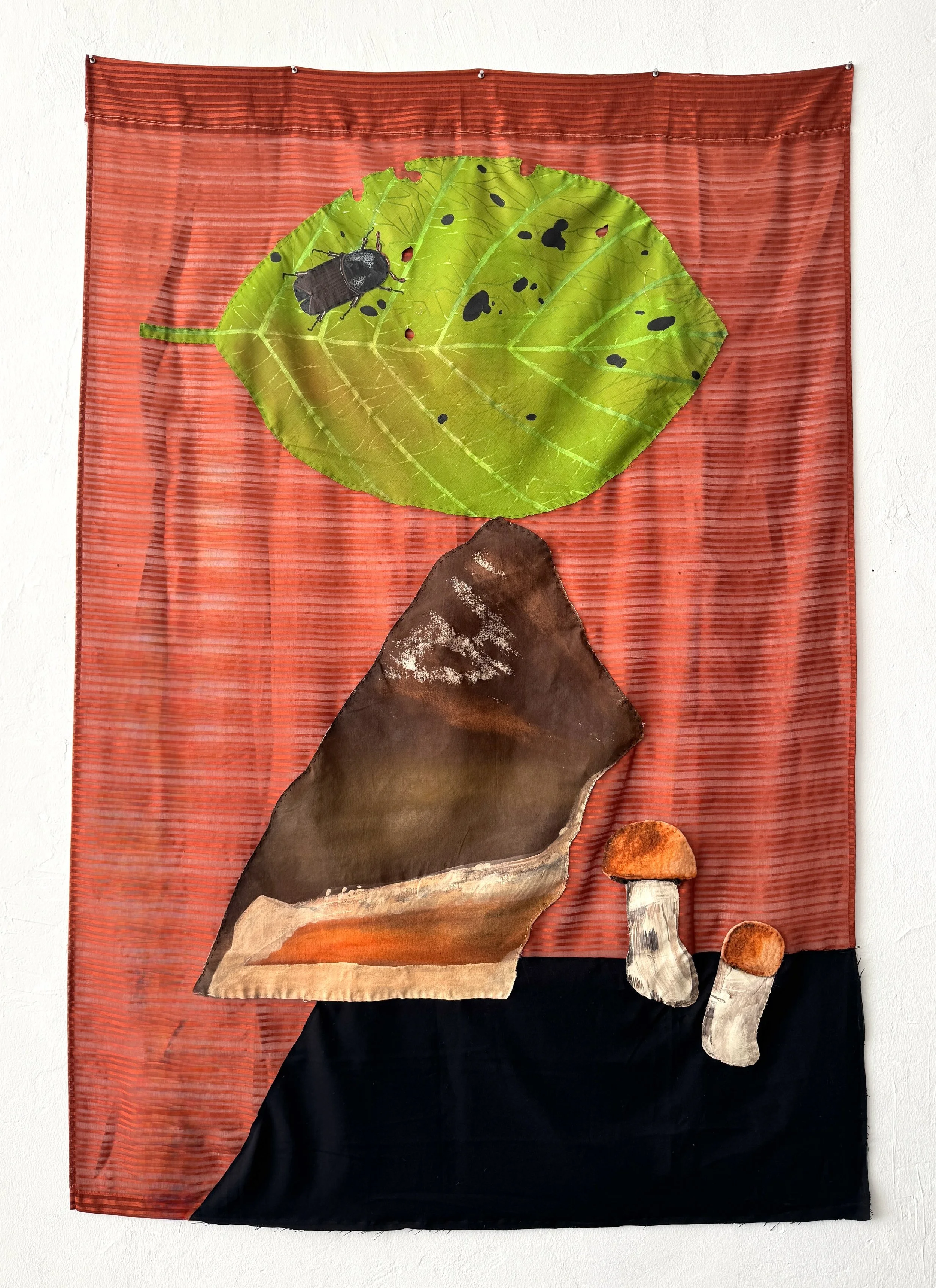
The Mountain Eventually
Disappears, 2025
Acrylic on handsewn home
linens and canvas
78”h x 53”w
The archipelagos of eastern Sweden
were originally mountains in the history
of the world, but the slow and dynamic
movement of northern glaciers and ice
ages eventually wore them down to sea
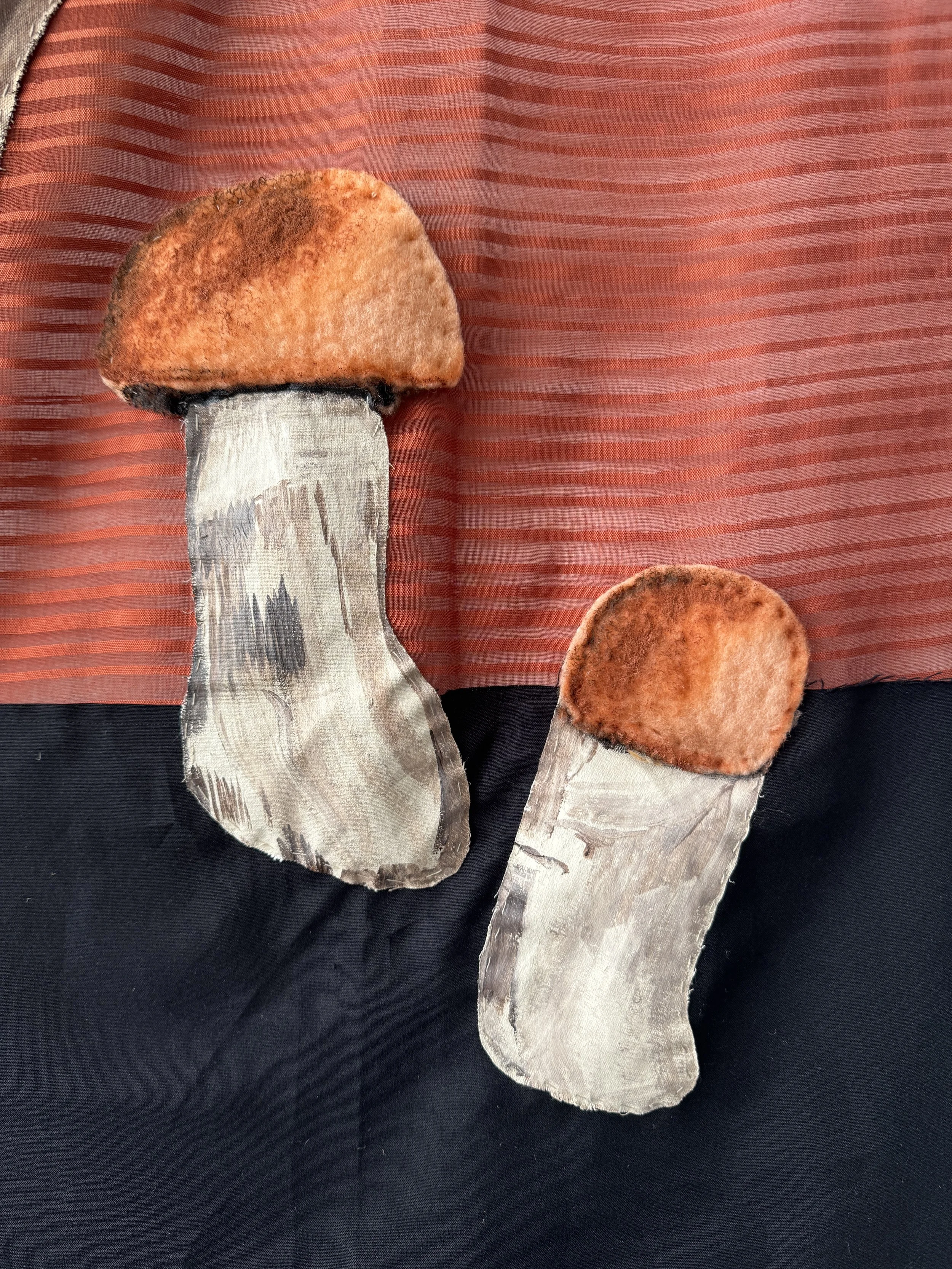
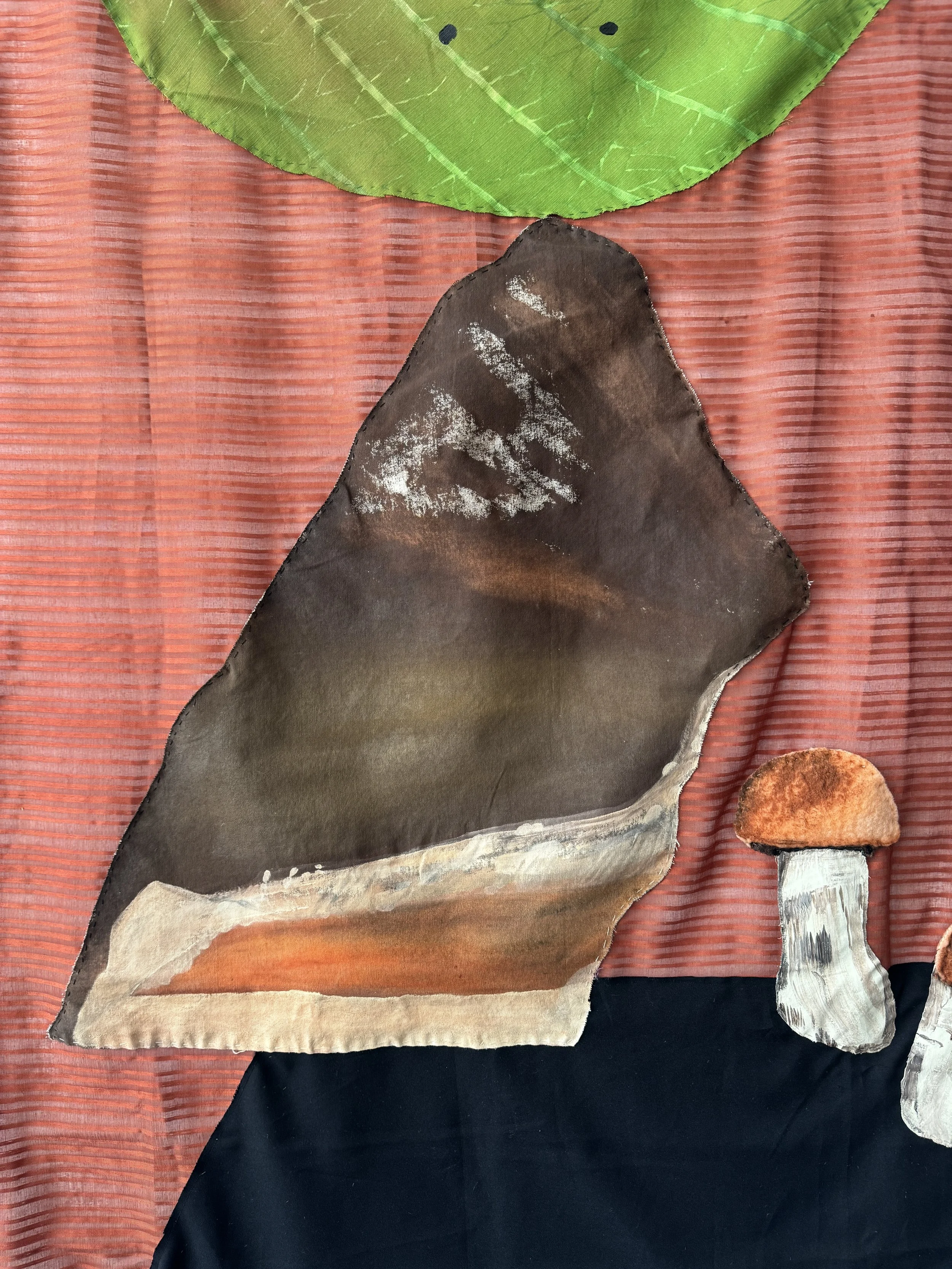
level. In this work, a rock found in Björko
that resembles a mountain with a piece
of its base taken out appears to form a
stable foundation with mushrooms.
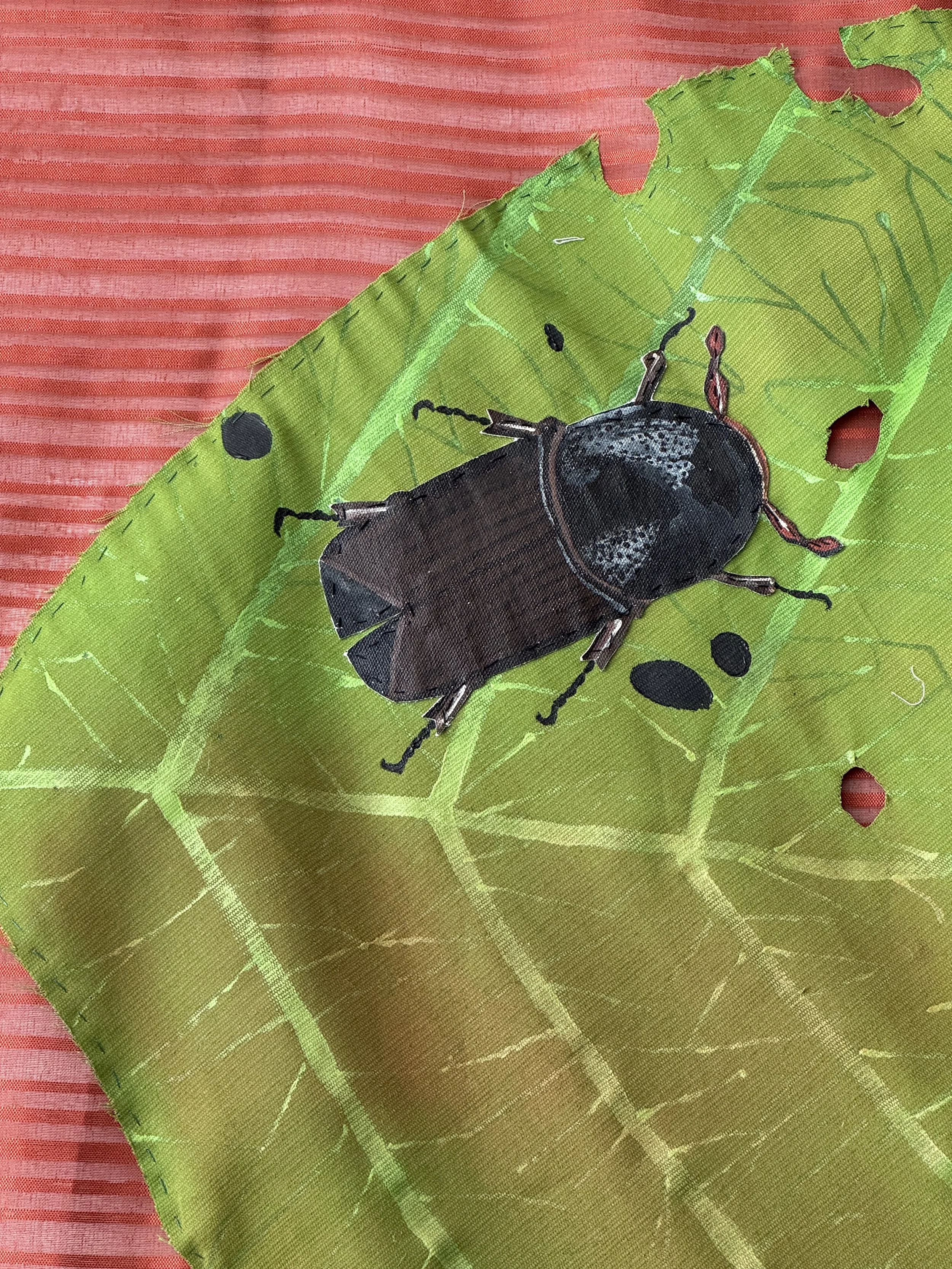
Hanging off the edge of a platform, it
holds a leaf being devoured by a bark
beetle, a species considered “invasive”
in eastern Sweden. There is a magic to
the way the earth destroys itself in its
becoming. Fungus, animals, plants,
and rocks, all part of its digestive system,
a whole mysterious process. Our human
lives are marked with loss and the fear
of dissolution, but in nature, we can
plainly see it is part of a bigger process.
Destruction, like it or not, is an essential
part of becoming. This work asks how
reverence to this truth might inform a
different action in our relationship to it.
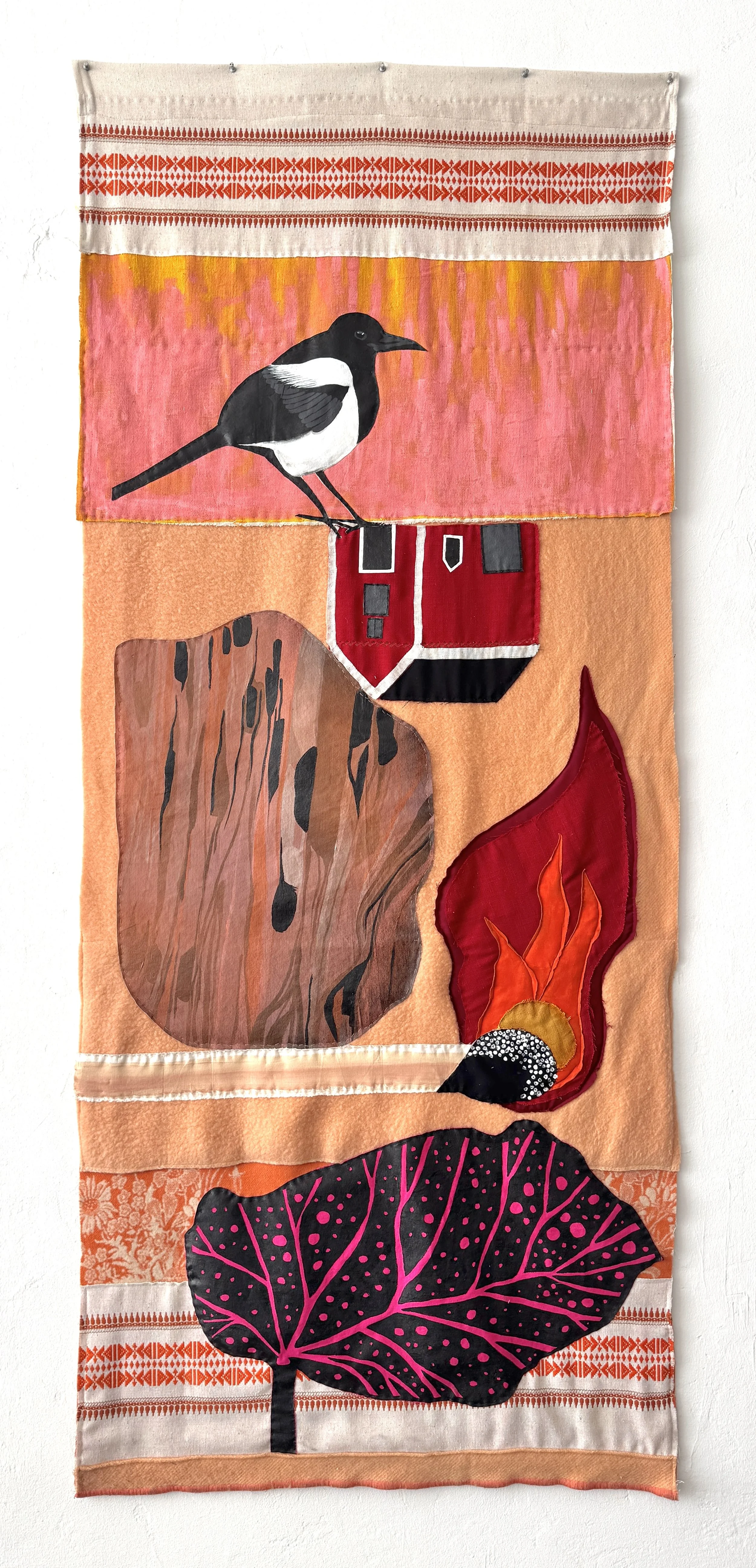
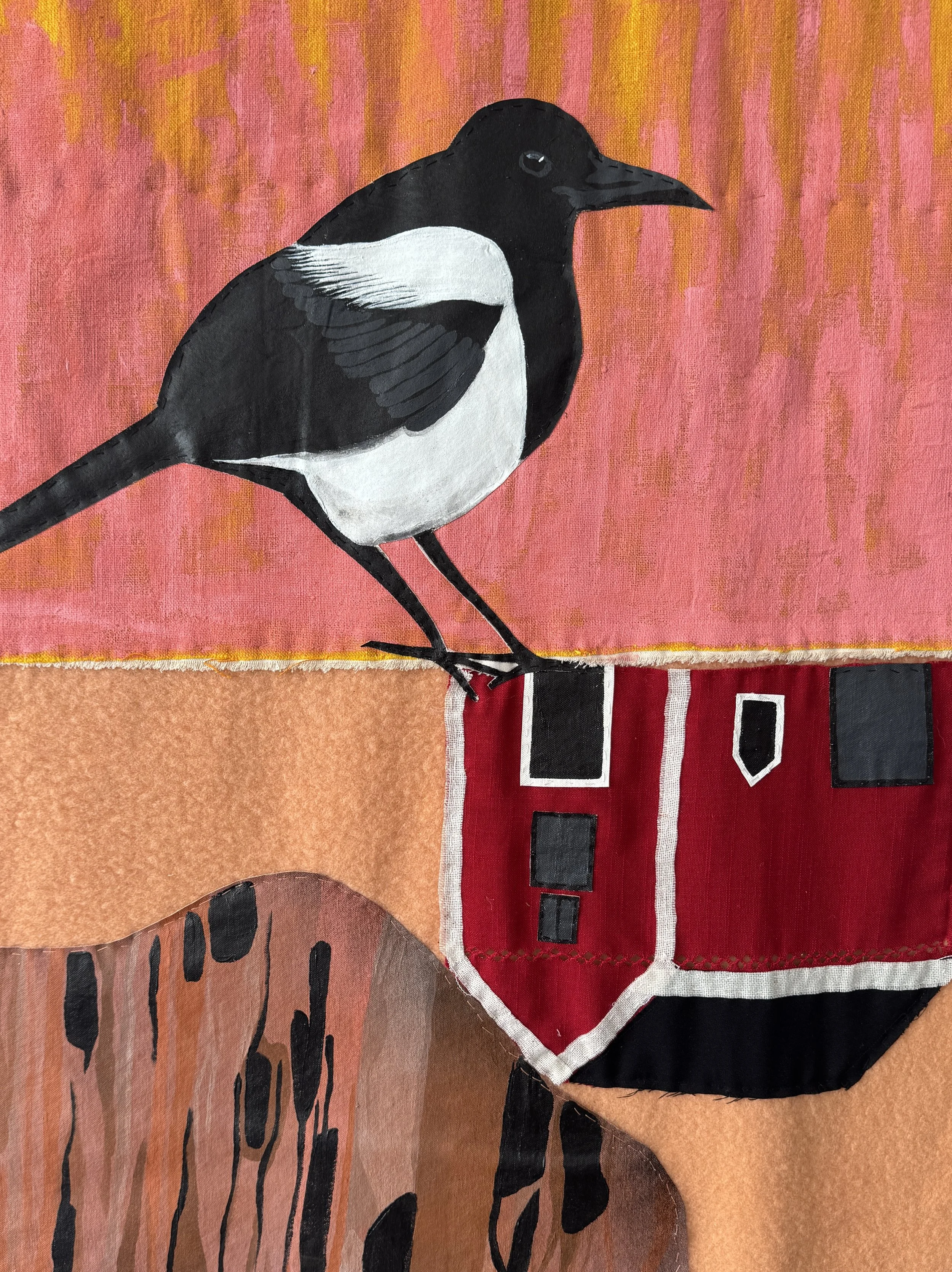
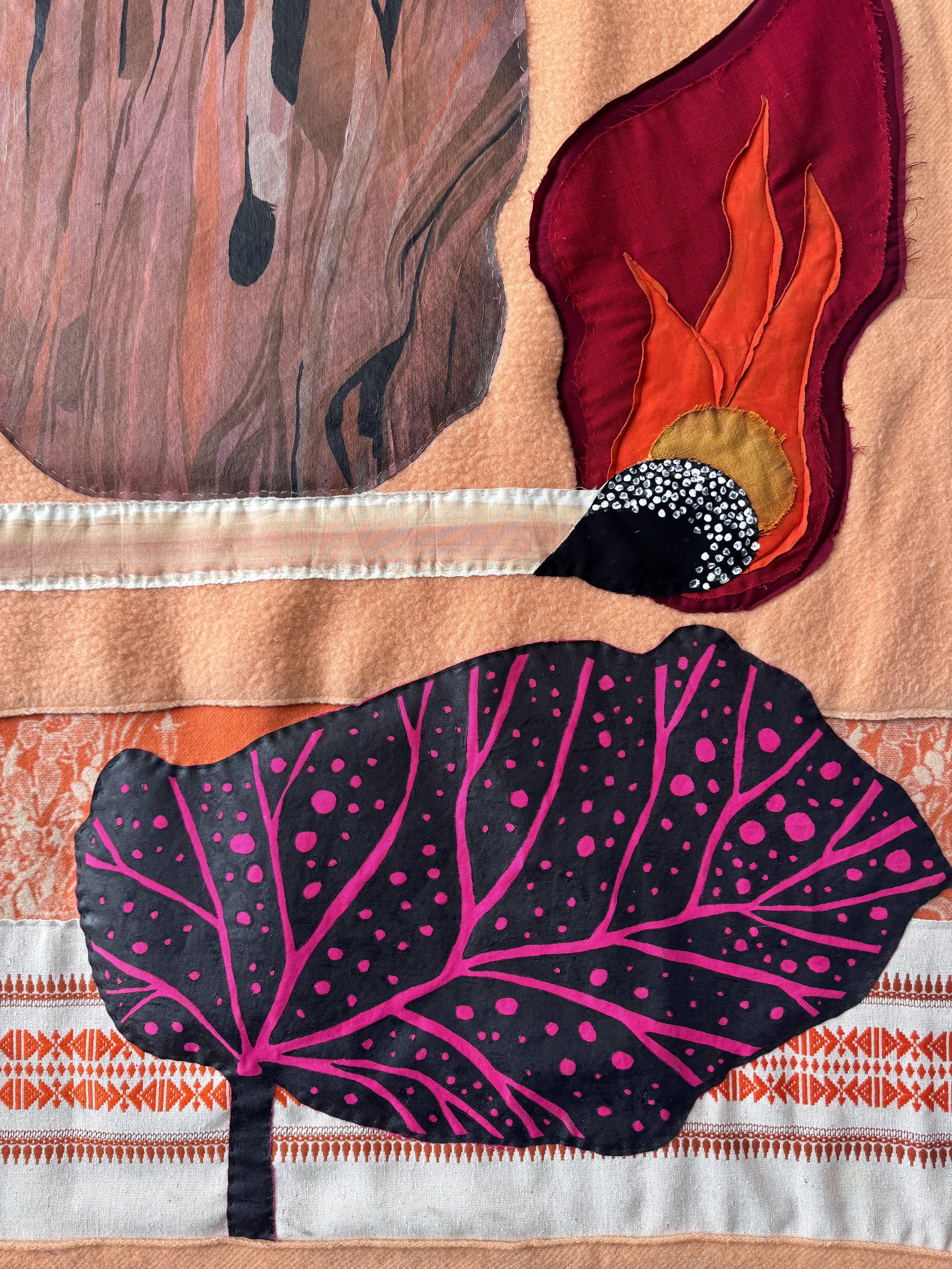
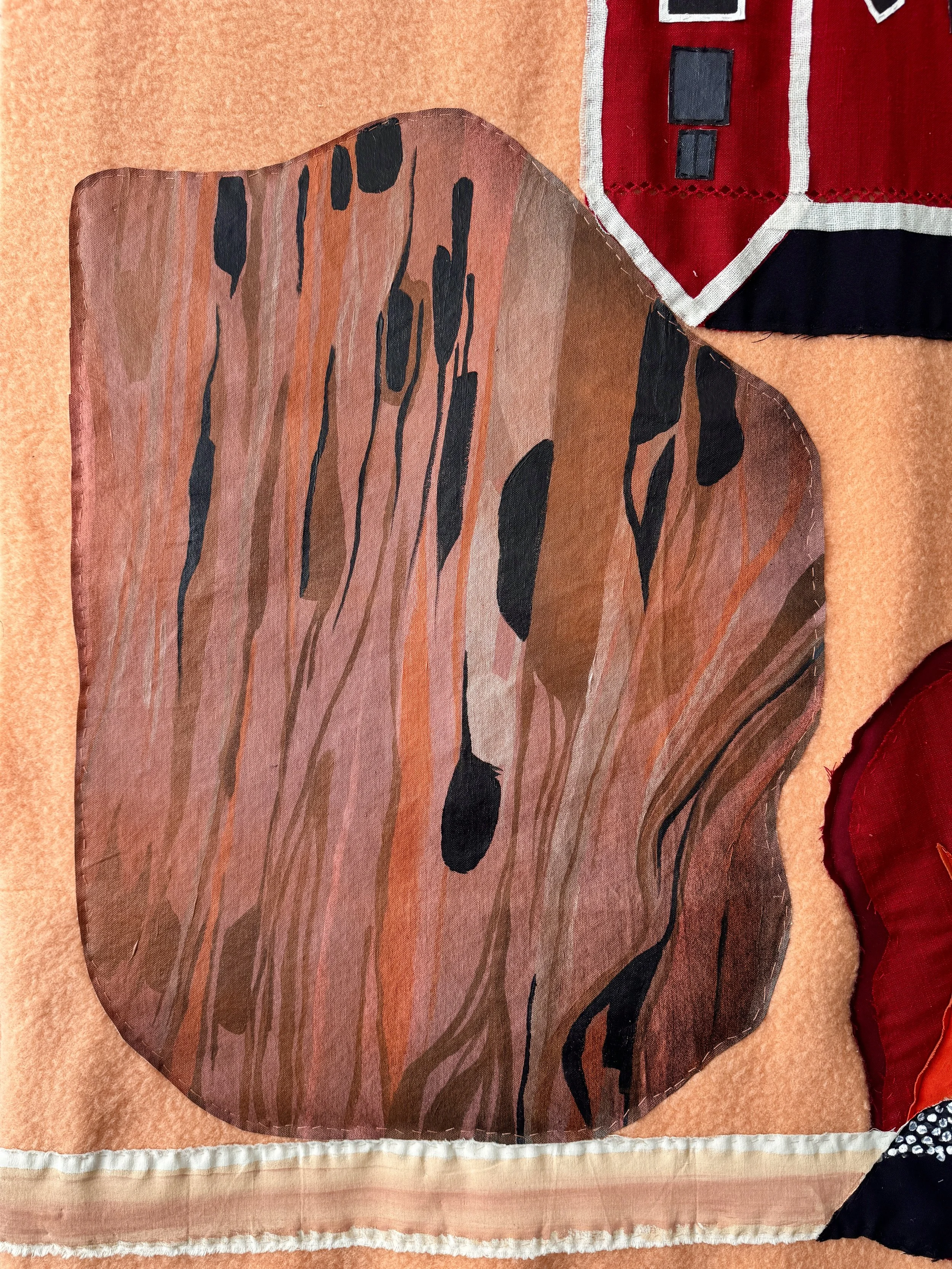
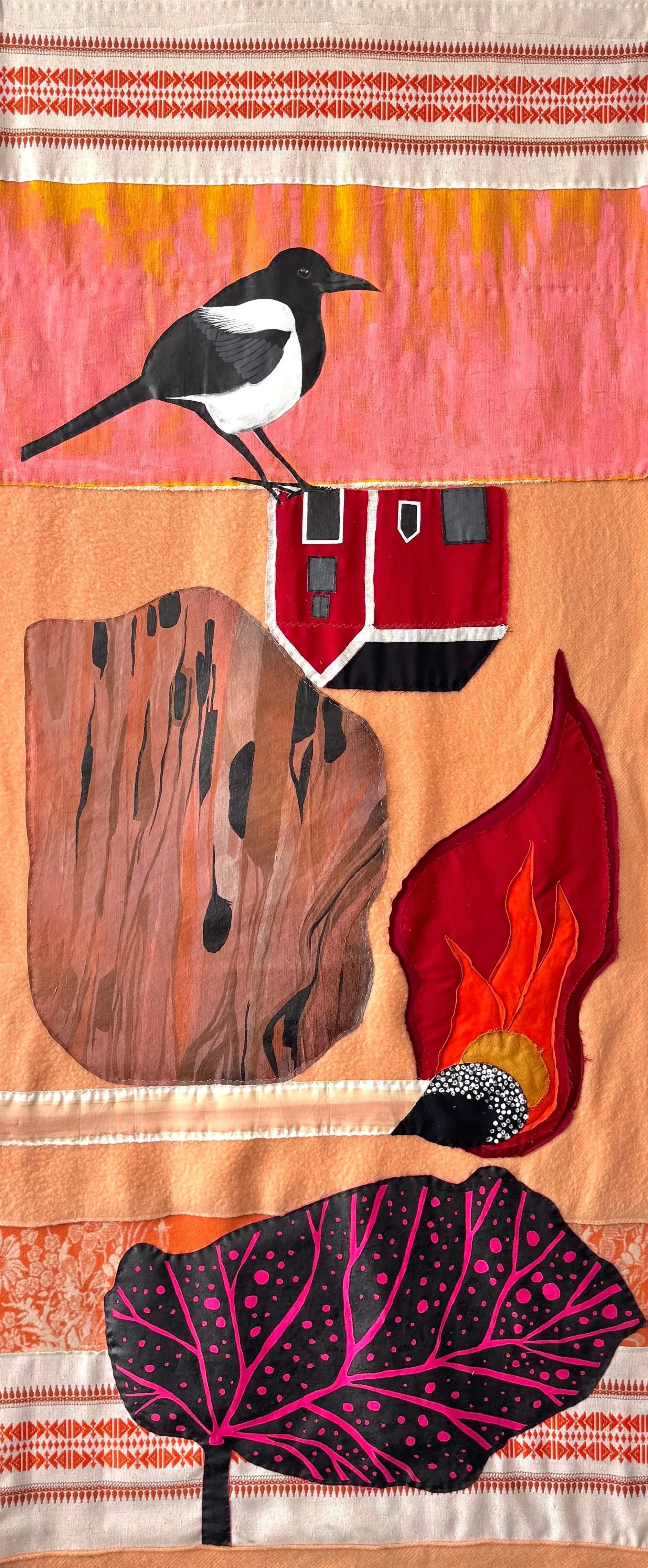
Totem (Magpie, Gneiss, Fire,
Begonia), 2025
Acrylic on handsewn linens
and canvas
38 1/2”w x 91 1/2”h
LIke an epic poem, this work looks at the
precarity of human existence in the
massive timeline of the earth from the
small position of Björko, Sweden where it
was conceived and finished. The
magpie belongs to a species that
started roughly 60 million years ago
compared to the roughly 300,000 years
homo sapiens have been recorded on
earth. Common to the archipelagos of
Sweden, magpies rank as one of the
most intelligent species on the
planet showing abilities of self
awareness and complex social
dynamics. They are capable of
remembering human faces and
behavior and can transfer that
knowledge to their children. The earth
is watching us whether we
acknowledge that or not. Gneiss, also a
common rock to the archipelago, is a
metamorphic rock that forms in
extreme conditions when mountains
are formed. Mountains that in Björko
have been long since reduced to sea
level from powerful earth process and
destruction. Fire activates these
formations, something we have learned
to use, something we attempt to
control. Begonias are a common house
plant in Sweden that are not indigenous
to the place. Further examples of the
human instinct to control environment. I
was struck that the veins of begonia
leaves mirror the passage of lava
underground, the inner workings of the
planet in the dark.